Our tailored analytical solutions are designed to help clients in fully understanding their protein based therapeutics at all stages of of their journey from development to batch release testing. RSSL's expertise incorporates a broad range of peptides and protein therapeutic measurements using conventional and advanced analytical methods including cell based activity measurements.
With services designed to help you meet the characterisation, comparability and release testing requirements as outlined in the International Committee Harmonisation (ICH) guidelines such as the ICH Q6B and the ICH Q5E, our history in current Good Manufacturing Practice (cGMP) makes RSSL the analytical partner of choice for biologicals.


One analytical partner across the entire product lifecycle
Fully aligned with global regulatory standards including ICH, EMEA and FDA.
Bespoke protocols, analytical workflows, and storage conditions agreed upfront
An established reputation for cGMP regulatory compliance and pharmacopoeial experience.
Mass spectrometry, structural analysis, cell-based assays, NMR, ICP-MS, qPCR and more
Fully aligned with ICHQ6B, EMEA and FDA
Our comprehensive physical and chemical characterisation services for protein therapeutics use state-of-the-art analytical techniques to ensure accuracy, compliance and deep insights into the molecular properties of clients protein-based products.
Molecular weight determination is carried out using high-accuracy mass spectrometry analysis. Proteins are analysed in their intact form by reverse phase chromatography or size exclusion chromatography coupled with mass spectrometry used to determine the molecular mass of the protein for greater accuracy and precision.
Complementary electrophoretic techniques such as SDS-PAGE and CE-SDS with UV or fluorescence detection provide detailed verification of protein profiles. Additionally size exclusion chromatography (SEC) equipped with UV or fluorescence detection supports molecular mass assessment distribution to determine the presence of aggregates.
We conduct chromatographic and electrophoretic profiling using techniques such as size exclusion chromatography (SEC), ion exchange chromatography (IEX), reverse-phase chromatography (RP) and capillary electrophoresis (CE-SDS, CE-IEF, and CZE).
These methods provide clients with detailed insights into heterogeneity, isoform distribution and purity of the protein and can be used at various stages of the product life cycle alongside conventional methods such as SDS-PAGE and Western Blotting.
We determine protein quantification using European Pharmacopoeia (EP) and United States Pharmacopeia (USP) methods, ensuring compliance with global standards. Measurements are carried out using colorimetric assays to quantify the total amount of proteins once the extinction coefficient and the amino acid quantification is established.
Protein sequence confirmation and identification of post-translational modification (PTM) analysis is performed at RSSL by proteolytic digestion followed by liquid chromatography-tandem mass spectrometry (QToF or Orbitrap).
This approach enables accurate confirmation of the protein sequence including N- and C-terminal sequence confirmation, location of disulfide bonds and identification/location of post-translational modification (including oxidation, deamidation, acetylation, ubiquitination and glycosylation). A comprehensive understanding of protein modifications provides critical information to determine the functionality and stability of the product.
RSSL carry out the extinction coefficient of proteins through UV/visible absorbance measurements using solutions with known protein content accurately quantified by amino acid analysis.
Higher order structural analysis is performed using far- and near-UV circular dichroism (CD) and Fourier-transform infrared spectroscopy (FTIR) which provides insights into the structural integrity. RSSL also performs aggregation studies using techniques such as size exclusion chromatography and dynamic light scattering (DLS).
We provide additional methodologies including multi-angle light scattering (MALS), sedimentation velocity analytical ultracentrifugation and differential scanning calorimetry (DSC) to provide clients with vital additional assessments of aggregation ensuring a thorough understanding of protein under various conditions.
All testing in line with ICH guidelines
Impurity analysis is a critical aspect of protein therapeutic quality control. At RSSL, we offer a broad range of services addressing residual solvent analysis, process related impurities and product related impurities of biopharmaceuticals in line with the ICH Guidelines such as ICHQ1A, ICHQ3A, ICHQ3B, ICHQ3D and ICHQ6.
Process related impurities are residues from the manufacturing process which include cell substrates such as host cell proteins and host cell DNA. Impurities can also include cell culture derived impurities such as antibiotics and cell culture media residues or downstream derived impurities such as enzymatic/ proteolytic agents, reducing agents, inorganic salts, solvents, nitrosamines and leachables
RSSL reputation for cGMP regulatory compliance, implementation of pharmacopeia monographs and comprehensive advanced analytical and bioanalytical methods provide the ideal setting for investigative and quantitative studies of process related impurities in bio-products and for generating data for regulatory approval.
RSSL process related impurity techniques include liquid chromatography and gas chromatography, mass spectrometry (MS), nuclear magnetic resonance (NMR), inductively couple mass spectrometry (ICP-MS), polymerase chain reaction (PCR), enzyme linked immunosorbent assays (ELISA) and enzymatic assays. Our expertise in chemistry, elemental analysis, biochemistry, molecular and cell biology help define the best strategy to meet regulatory requirements and accelerate the development of client’s products.
Host cell DNA
Residual host cell DNA (hcDNA) is a critical process-related impurity that must be monitored and controlled during the production of biotherapeutics to minimize the risk of introducing foreign genetic material into patients.
Regulatory agencies require sensitive and reliable methods for the detection and quantification of residual DNA in biologic products.
USP General Chapter <509>, Residual DNA Testing, recommends qPCR as the quantification method for biologics produced in systems such as Escherichia coli (E. coli) and Chinese hamster ovary (CHO) cells.
At RSSL, we offer multiple approaches for residual DNA analysis tailored to your product and regulatory requirements. Total DNA concentration can be quantified using highly sensitive fluorescence-based assays such as PicoGreen®, while host-specific residual DNA can be detected and quantified using qPCR assays designed for the relevant production host.
Molecular variants, such as product related impurities arise during the manufacture and/or storage. These do not have the same properties as the desired product. Examples of product-related impurities can include truncated and other modified forms, aggregates, precursors and degradation products
We work with clients to provide tailored analytical workflows for quantification and identification that meet client’s needs using chromatography, electrophoretic and mass spectrometry approaches
Deamidation, oxidation, mismatched disulfide bridges and altered post-translational modifications such as glycosylation or phosphorylation are separated, quantified and identified using chromatographic, electrophoretic and high-resolution mass spectrometry methods.
Due to extensive capability, RSSL are able to offer the bespoke service of native size exclusion chromatography coupled with high resolution mass spectrometry additionally to other methods such as UV, FLD and MALS detection. This service monitors complex aggregate integrity and identity.
RSSL develops tailored potency and activity assays to support your biologic throughout the development lifecycle, utilising cutting edge facilities and strong collaborative partnerships with antibody and cell line producers.
Cell-based potency assays
Cell-based potency assays are a regulatory requirement as your therapeutic approaches commercialisation, measuring quantifiable biological response and active content. RSSL develops these assays at an early stage so the data is ready to support stability testing, formulation development, and GMP batch release.
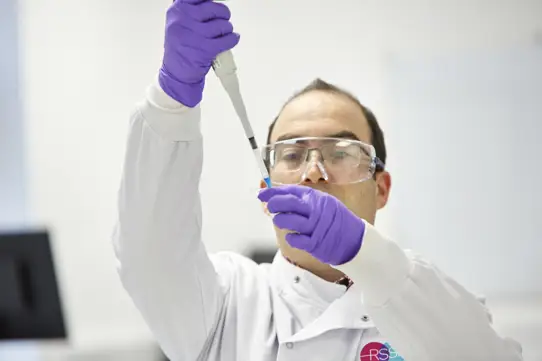
Ligand binding assays
Ligand binding assays use the specificity of an antibody to its antigen to quantify the amount of drug substance or product in a sample. Often used as surrogate potency or activity methods, these assays give you a reliable measure of biological activity throughout the development lifecycle.
Cytotoxicity assays
For anticancer therapeutics and mitogenic drugs, RSSL develops bespoke cytotoxicity assays, including USP-87 and proliferation assays, to ensure reliable potency evaluation at every stage.
RSSL delivers both long-term and accelerated stability studies, using state-of-the-art storage facilities and a range of analytical and biomolecular methods tailored to your requirements. Testing protocols are agreed with you upfront, ensuring the data supports your characterisation, formulation, and GMP batch release requirements.
Longterm stability testing
Samples are typically stored at -20 °C ± 2 °C or 5 °C ± 3 °C for up to 12 months, with analysis at 3, 6, 9, and 12-month intervals — giving you reliable data across the full shelf-life timeline.
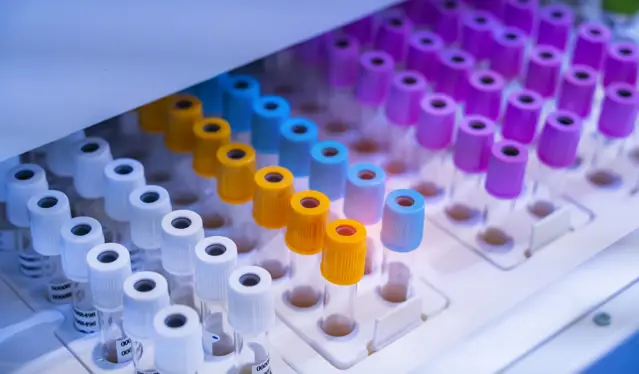
Accelerated stability testing
Conducted over 6 months at conditions of 5 °C ± 3 °C or 25 °C ± 2 °C / 60% RH, with analysis at the 3 and 6 month timepoints, designed to identify potential degradation pathways early in development.
Our highly skilled team of analysts have decades of experience providing reliable, accurate and timely results in accordance with various major pharmacopoeia. Our testing capabilities encompass a wide range of techniques structured to support quality control throughout the pharmaceutical development and manufacturing process, from raw materials to finished products.
RSSL provide consultation and analytical services for environmental monitoring to enable manufacturers to accurately determine microbial bioburden. Also carried out by RSSL are microbial identification services which assist clients in defining root cause analysis and corrective and/or preventive action implementation.
This analysis enables clients to meet regulatory requirements such as Ph. Eur, JP and USP regulations reliably and cost-effectively for terminally sterilised or aseptic products.
RSSL supports protein-based therapeutics from development through to GMP batch release testing. Services include physical chemical characterisation, impurity analysis, host cell DNA testing, activity and potency assays, stability studies, pharmacopoeia testing, and environmental monitoring — covering monoclonal antibodies, bispecific antibodies, enzymes, cytokines, ADCs, and biosimilars.
Our services align with ICH Q6B, ICH Q5E, ICH Q3A–D, EMEA, and FDA guidelines under cGMP conditions. Pharmacopoeia testing is performed against Ph. Eur, JP, and USP.
Molecular weight by LC-MS, SDS-PAGE, and SEC; amino acid sequence and PTM analysis by LC-MS/MS; quantity by A280 and amino acid analysis; chromatographic and electrophoretic profiling; extinction coefficient determination; and higher order structural analysis by CD, MALS, FTIR, DSC, and SEC — all aligned with ICH Q6B.
We address process-related impurities (host cell proteins, hcDNA, residual solvents) and product-related impurities (aggregates, fragments, oxidised/deamidated variants) using tailored workflows for quantification and identification via chromatography, electrophoresis, and mass spectrometry.
Total DNA is quantified using fluorescence-based assays (PicoGreen®), while host-specific hcDNA is detected via qPCR for relevant production hosts (E. coli, CHO cells) — aligned with USP <509> recommendations.
We develop cell-based potency assays, ligand binding assays, and bespoke cytotoxicity assays (including USP-87 and proliferation assays). Cell-based assays are a regulatory requirement as therapeutics approach commercialisation, measuring quantifiable biological response for GMP batch release.
Long-term studies (12 months) at -20 °C ± 2 °C or 5 °C ± 3 °C with analysis at 3, 6, 9, and 12 months. Accelerated studies (6 months) at 5 °C ± 3 °C or 25 °C ± 2 °C / 60% RH at 3 and 6-month timepoints. Protocols are tailored to each client.
Yes — we offer microbial bioburden determination, microbial identification, and root cause/CAPA support, enabling compliance with Ph. Eur, JP, and USP for terminally sterilised or aseptic products.